
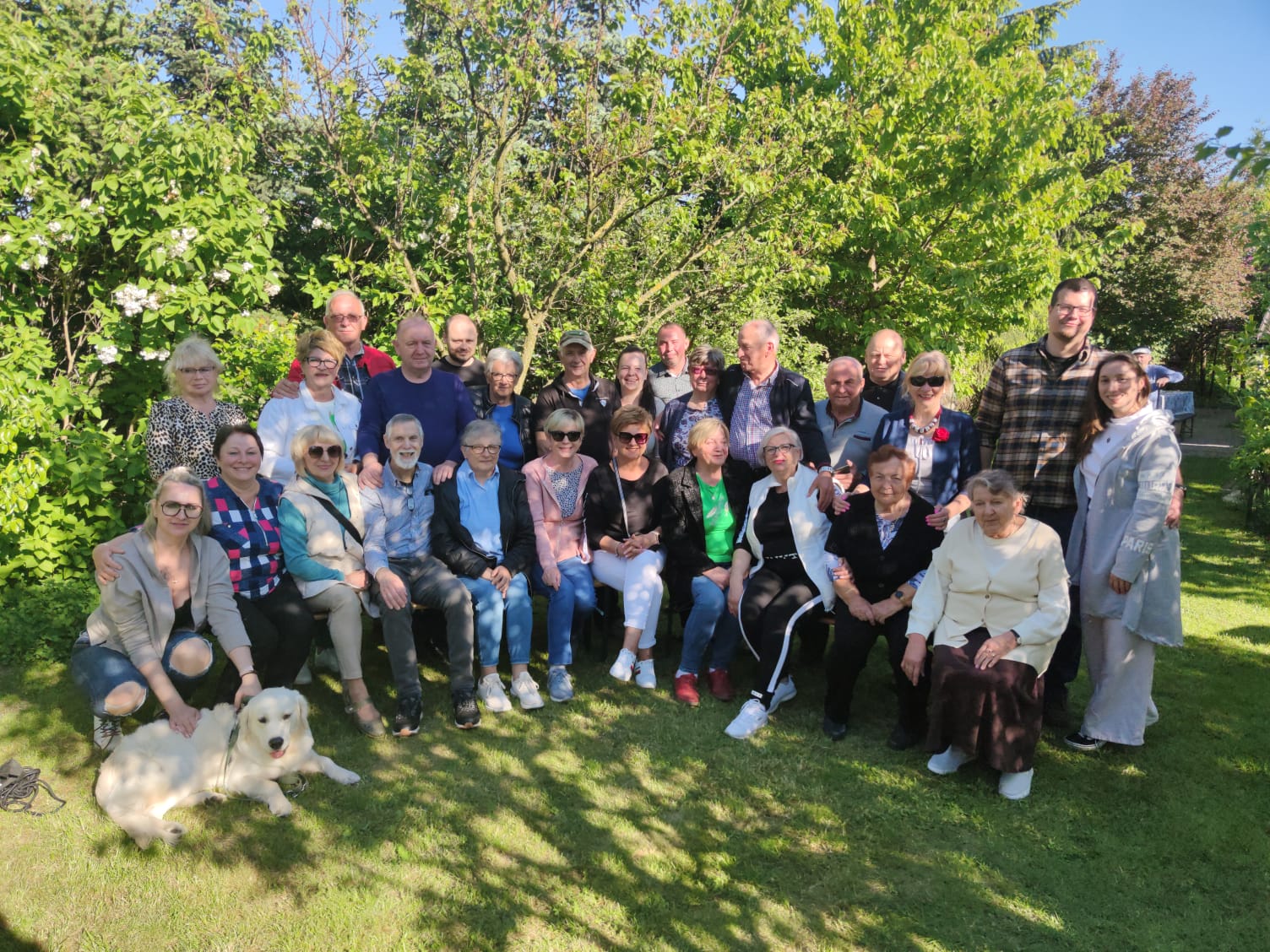
with Leo Michalak and Polish Family
Genealogia Polonica carried out extensive genealogical research to trace the families of Client’s Polish Ancestor siblings through the generations, all the way to their living descendants.
The research brought results. Our client travelled to Poland and met the grandchildren of siblings, along with their children and grandchildren. Afterwards, he wrote to us:
“It is with great pleasure and gratitude that I can inform you all that your hard work and perseverance has brought great success. I am recently back from visiting all the living fellow grandchildren of Marianna Michalak Musialska’s siblings, their children and grandchildren. Each of you deserves high praise and abundant thanks.”
Moments like this are why we do this work. Archival research can feel like paperwork, but behind every record there are real people, and sometimes their descendants are still living in the same region, waiting to meet you.
Finding living relatives in Poland usually means combining many sources, such as parish records, civil registration records, census records, and other archival documents, to follow each sibling’s line down to the present day. It takes time and patience, but as this story shows, the result can be a family reunion.
An underrated source: Polish cemeteries
When people think of genealogical research, they usually think of parish and civil records. But when the goal is to find living relatives in Poland, cemetery research is one of the most underrated sources.
Headstones often list whole families in one place, including married names of women, which are hard to trace in other records. Inscriptions can reveal names and dates that archives do not show, and the way a grave is cared for can point to relatives who still live nearby.
Can I find living relatives in Poland through genealogical research?
Yes, in many cases it is possible. By tracing the siblings of your ancestors and their descendants through archival records, a researcher can often identify branches of the family that still live in Poland.
Can cemetery research help me find relatives in Poland?
Yes. Headstones can show family names, dates, and connections between relatives, and leaving a note at the grave may help identify who looks after a family grave today – mostly it’s your living relative. Cemetery research works best together with archival records.
What information do I need to start looking for my Polish family?
Even basic details help: your ancestor’s full name, approximate year of birth, and the town or region they came from. Family stories, old letters, and photographs can also provide useful clues.
How long does it take to find relatives in Poland?
It depends on the surviving records and how many family lines need to be followed. Most of the searches take several months, but waiting for contact from family can take even longer.
Which records are used to trace a Polish family to the present day?
Researchers typically use parish records, civil registration records, census records, cemetery records and headstone inscriptions, and other archival sources, following each family line generation by generation.
Can Genealogia Polonica help me contact my relatives?
Please get in touch and describe your situation. We will explain what is possible in your case.
