
Why can a Polish citizenship by descent application be denied? Discover a real case involving the Volksliste, historical records, archival research and unexpected findings.
In 2024, Genealogia Polonica handled a complex case for a client applying for confirmation of Polish citizenship by descent. The client possessed strong preliminary evidence proving that his late mother was a Polish citizen. During the initial stages of genealogical research, our team located official residency registration cards (karty meldunkowe) and birth records. In the vast majority of cases, such documentation is entirely sufficient to successfully obtain a Polish passport and citizenship. However, despite our professional recommendations to conduct deeper archival research, the client decided to stop further investigation.
What Could Go Wrong in a Polish Citizenship Application?
During our initial archival search, we uncovered historical records regarding the client’s grandfather. These documents revealed that he had signed the Volksliste (the German Ethnic List during WWII) and expressed a desire to remain in Germany after the end of World War II.
Despite these red flags—and the suspicion that the client’s mother might have also renounced her Polish nationality—the client was determined to proceed. One argument in favor of moving forward was a document indicating that the mother’s first husband had joined the Polish Armed Forces in the West (in Scotland). Unfortunately, our subsequent search in the UK Ministry of Defence (MOD) archives yielded negative results.
Understanding the risks, the client decided to move forward with the legal process. Genealogia Polonica prepared the complete citizenship application, compiled all supporting documents, and arranged for official sworn translations into Polish.
Where Are Polish Citizenship Applications Processed?
Based on the mother’s place of birth, the application was submitted to the Wielkopolska Voivodeship Office (Wielkopolski Urząd Wojewódzki) in Poznań. Throughout the administrative proceedings, the Voivode issued multiple official notices extending the deadline for the decision and requesting additional biographical data, which our team promptly supplied.
Does the Voivodeship Office Rely Only on Submitted Documents?
No. Polish authorities conduct their own independent verification. In this case, the Voivodeship Office ordered extensive archival queries across multiple institutions, including:
- Polish consulate archives
- State Archives (Archiwa Państwowe)
- Civil Registry Offices (Urzędy Stanu Cywilnego)
- The Institute of National Remembrance (IPN)
Due to strict European data protection laws (GDPR) and archival regulations, private researchers or applicants cannot independently access many of these restricted files without an official administrative procedure.
What Can Cause a Negative Decision on Polish Citizenship?
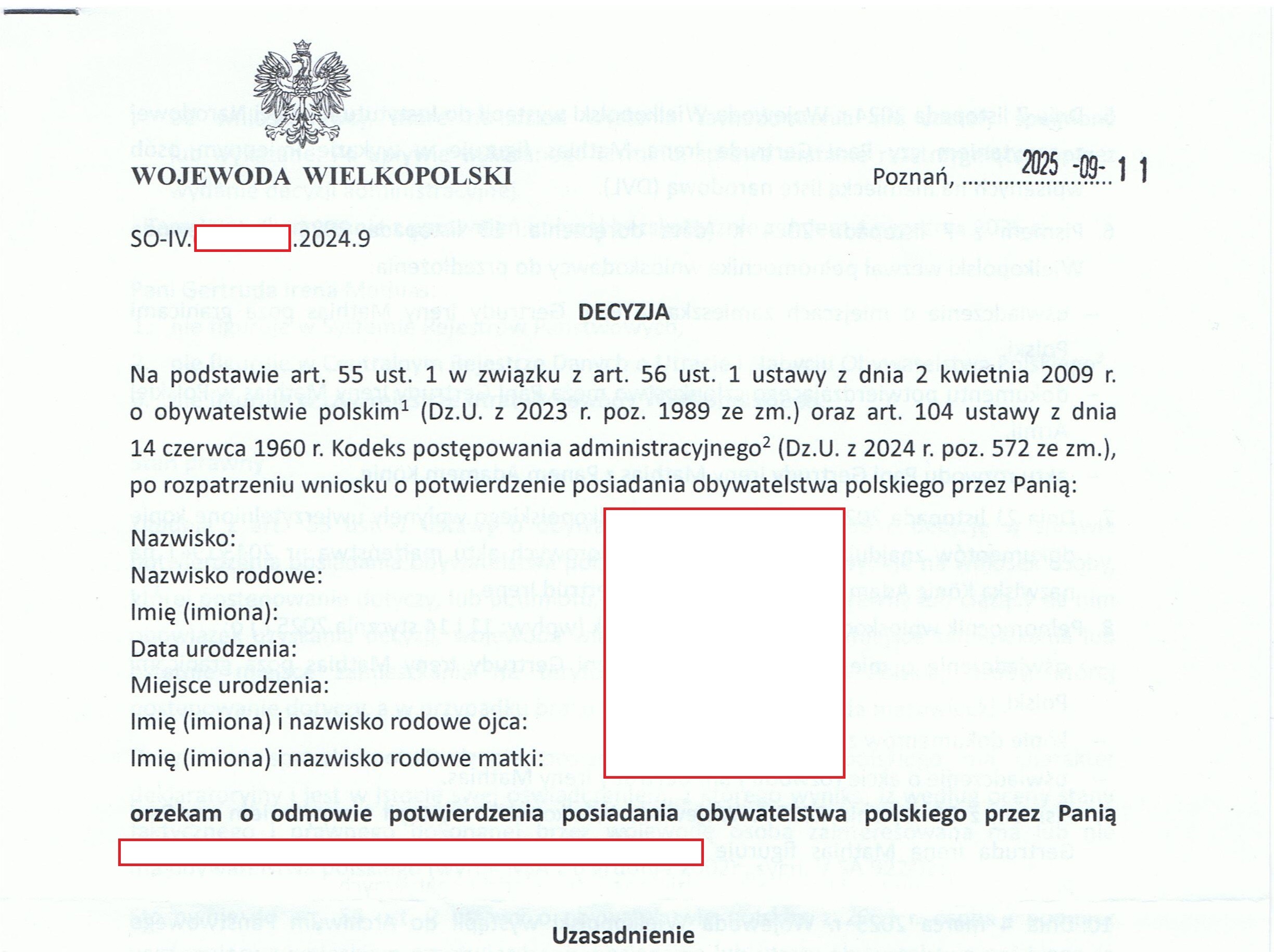
During its 16-month investigation, the Voivodeship Office issued 8 separate archival queries. Ultimately, the authorities uncovered the Volksliste records alongside an official declaration in which the client’s mother and her first husband formally renounced their Polish citizenship and accepted German citizenship.
Because Polish citizenship was legally lost in the past, the Voivode was forced to issue a negative decision (odmowa potwierdzenia posiadania obywatelstwa polskiego). This case demonstrates how thorough Polish government background checks can be, even when an applicant submits a substantial initial portfolio of evidence.
Why Is There Never a 100% Guarantee in Polish Citizenship Cases?
This real-life case proves that even strong family records do not guarantee a positive outcome. Ancestors may have taken legal actions during turbulent historical periods that their descendants never knew about, regardless of how close the family was.
At Genealogia Polonica, we always maintain full transparency about these risks. While we ensure every application is meticulously prepared and backed by the strongest possible archival evidence, hidden historical records can occasionally alter the legal outcome.
Alternative Pathways to Polish Citizenship: What Can You Do Next?
The client accepted the Voivode’s decision with understanding, though he was deeply surprised by this previously unknown chapter of his mother’s history. Instead of filing an administrative appeal, he pivoted to alternative legal routes to reclaim his heritage:
- Presidential Grant of Polish Citizenship (Nadanie obywatelstwa przez Prezydenta RP): Applying directly to the President of Poland, which is a discretionary process not strictly bound by past loss of citizenship.
- The Polish Card (Karta Polaka): He began learning the Polish language to apply for a Karta Polaka based on his Polish ancestry, which later provides a fast-track pathway to permanent residency and citizenship.
Although his journey has become longer, we remain confident that with the right legal strategy, he will achieve his ultimate goal of becoming a Polish citizen.Looking to confirm your Polish ancestry or need expert assistance with a complex citizenship case?
